When a power interruption stops production, even a short outage can delay orders, disrupt refrigeration, or leave workshop tools idle. Choosing a generator is therefore more than comparing its price or rated output. A Yuchai Generator Set may suit businesses seeking dependable backup or prime power, but the right choice depends on the actual demands of the site. Power matters.
Start with the equipment you need to run. Motors, pumps, and compressors can draw more power during startup than they use continuously. List those loads, consider which must operate together, and allow for future changes. Then compare generator capacity, fuel consumption, operating conditions, and maintenance requirements against that list. A model that appears adequate on paper may struggle with a poorly planned load.
Site details matter too. Think about ventilation, installation space, ambient temperature, noise limits, and access for routine servicing. Ask suppliers for clear specifications and confirm that local service support and parts are available. These checks help make the decision more evidence-based; product claims alone are not enough. No generator fits every business. That is easy to forget when a low purchase price looks attractive. It is also worth reviewing expected operating hours and maintenance costs before deciding. A generator set can provide useful continuity, but it cannot correct an undersized electrical plan or neglected servicing. This guide explores the practical reasons businesses consider Yuchai equipment, what to check before purchase, and where careful planning can prevent costly surprises.
What Is a Generator Set?
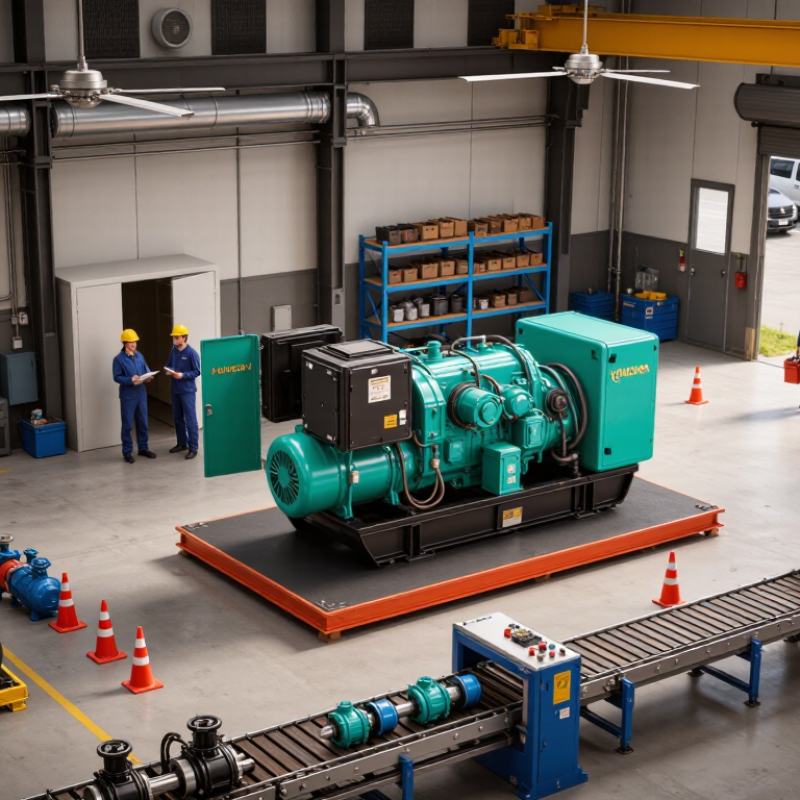
A generator set, or genset, combines an engine, an alternator, and control equipment to produce electricity. The engine supplies mechanical power; the alternator converts it into electrical power. A control panel monitors output, while a transfer switch can connect the unit to selected business circuits when utility supply fails. Fuel type, output rating, voltage, and frequency determine whether a set suits a workshop, office, or larger facility. In practice, it is a coordinated power system, not just an engine in a metal enclosure.
Sizing matters. A unit that is too small may struggle when motors start, while an oversized set can run inefficiently at light loads. Allow for equipment such as pumps, refrigeration compressors, and lighting, plus the brief surge some motors require. Site details matter too: exhaust routing, ventilation, sound levels, and fuel storage all affect installation. Uptime Institute’s 2024 Annual Outage Analysis reported that 54% of respondents said their most recent significant outage cost more than $100,000. Backup power cannot prevent every outage, but careful planning can reduce disruption.
Tips: List essential loads before choosing a rating. Ask a qualified technician to check starting currents, operating conditions, and maintenance access. A neat specification on paper may still miss a real-world detail.
Generator sets convert engine power into electrical output. The chart below shows an illustrative 500 kW set operating at common load levels; output is calculated as a percentage of its rated capacity and is not brand-specific.
Actual output and recommended operating conditions depend on the specific generator set and its specifications.
A generator set turns fuel energy into electrical power through a coordinated sequence. Inside the engine, fuel burns in the cylinders and pushes pistons downward. The pistons rotate a crankshaft, which drives the alternator. That is the mechanical side.
The alternator contains a rotating magnetic field and stationary copper windings. As the rotor spins, its magnetic field changes around the windings, inducing electrical current. A voltage regulator adjusts the field to help keep output steady as loads change. Engine speed also matters: many systems maintain a set speed to support the required frequency. The exact design and settings vary by unit, so check the manufacturer’s specifications before connecting equipment. Simple in principle. Not always simple in the field. A motor starting under load, for example, may briefly demand more current than its normal running draw.
Tips
Inspect oil, coolant, and air filters before operation. Keep the set level and allow clear airflow around the radiator. Match the generator’s rated capacity to both continuous demand and startup surges. Record voltage and frequency readings during routine checks; small changes can reveal developing problems. These checks help, but they do not replace qualified servicing.
A generator set can support businesses that cannot afford an unexpected shutdown. On construction sites, it can run lighting, pumps, compressors, and tool chargers when grid access is limited. A warehouse may use backup power for security systems, loading-bay lights, and essential controls. Cold-storage operators can prioritize refrigeration equipment, where even a brief outage may threaten stock. The right capacity depends on actual demand, not just the total wattage printed on equipment labels.
Retail stores and small offices can keep point-of-sale systems, network equipment, and selected lights running during an outage. Workshops may need extra capacity for motors, which often draw more power when starting. It helps to record operating loads and startup requirements before choosing a unit. A common planning mistake is sizing only for normal operation. Heat, dust, altitude, and limited space can also affect performance and maintenance access. These details are easy to miss.
For a clinic or food-processing business, a generator may support designated critical circuits rather than every device in the building. An electrician can help identify those circuits and confirm safe transfer arrangements. Fuel storage, ventilation, noise, and service intervals deserve attention too. A neatly installed set is not automatically a reliable one. Regular load testing can reveal problems before a real outage does.
Businesses benefit from a generator set that can keep essential equipment running when grid power fails. For a workshop, that may mean maintaining lights, air compressors, and refrigeration through a brief outage. For a hotel, it can help protect guest comfort and keep key systems available. Reliable backup power can reduce downtime, limit spoiled stock, and help staff follow normal procedures under pressure. That matters.
A well-matched unit can also support sites with weak grid access or changing power needs. Before choosing one, compare its rated output with the equipment you actually plan to run, including motors that draw extra power at startup. Sizing is easy to get wrong. An undersized set may struggle under load, while an oversized one can waste fuel during light use. Check fuel consumption, service access, noise levels, and parts availability with a qualified supplier. Keep a maintenance log, test the unit under realistic load, and plan routine servicing around your operating schedule. These steps make performance more predictable, though they cannot prevent every fault. Some businesses may also find that the purchase and upkeep costs outweigh the value of backup power.
Before choosing a generator set, measure your real load rather than relying on the building’s total rated capacity. List essential equipment and note which motors start together; their brief starting demand can exceed normal running load. A qualified load assessment can help distinguish required kilowatts from kilovolt-amperes and avoid buying a set that struggles during startup. Small details matter. Record expected operating hours, backup duration, and whether loads may expand next year.
Check the site conditions, too. A set installed in a hot, dusty room may need different ventilation and maintenance planning than one outdoors. Ask how rated output changes with local altitude and temperature, and confirm fuel use at the loads you expect—not only at full load. Review noise limits, control functions, warranty terms, service response, and access to routine parts. Check applicable local requirements with the relevant authority. Get these points in writing. A spreadsheet can look tidy while overlooking a delivery delay or an awkward service clearance. That is worth revisiting. Request a proposed maintenance schedule and clarify who will test the system under load, how often, and what records the operator should keep.
| Evaluation Factor | What to Check | Why It Matters | Practical Buyer Action |
|---|---|---|---|
| Power requirement | Continuous running load, peak demand, motor-starting current, and the required voltage and frequency. | Motors and other inductive loads can require more power during startup than during normal operation. An undersized set may struggle to start or carry the load. | Prepare a load schedule and identify which equipment may start at the same time. Have a qualified supplier or electrical professional calculate the required capacity. |
| Power rating and duty | Confirm whether the quoted rating is intended for standby, prime, or continuous operation, and review the applicable rating conditions. | These duty categories describe different operating expectations. A standby rating is not automatically suitable for continuous use. | Match the rating to expected annual hours, load profile, and outage pattern. Request the rating basis and applicable ISO 8528 information in writing. |
| kW, kVA, and power factor | Check both the real-power requirement in kW and the apparent-power rating in kVA, along with the stated power factor. | kW represents real power; kVA represents apparent power. For a specified power factor, kW = kVA × power factor. | Compare the generator’s stated electrical rating with the site’s actual load characteristics instead of comparing kVA figures alone. |
| Fuel consumption | Review fuel-use data at several load levels, the test conditions, tank capacity, and expected runtime. | Fuel use changes with load and operating conditions, so a single consumption figure may not represent real-world operation. | Request a fuel-consumption curve or documented figures at relevant loads. Estimate runtime using usable tank capacity and the expected load profile. |
| Emissions and site requirements | Check the emissions rules applicable at the installation location, including any requirements for permits or operating hours. | Emissions requirements vary by jurisdiction, engine type, installation, and intended use. A unit acceptable in one location may not meet another location’s rules. | Confirm local requirements with the relevant authority or a qualified environmental professional before ordering. |
| Electrical compatibility | Verify phase, voltage, frequency, connection arrangement, protection, and compatibility with the site’s transfer equipment. | A generator must match the electrical system and connected loads. Incorrect settings or connections can cause equipment problems or unsafe operation. | Provide the site’s electrical drawings and load details for review by a qualified electrician before installation. |
| Starting and load response | Ask how the set handles step changes in load, motor starting, and the site’s largest individual loads. | Sudden load changes can affect voltage and frequency. The result depends on the generator, engine, controls, and load characteristics. | Request documented performance information for the expected load steps and consider a site-specific commissioning test. |
| Installation environment | Assess ambient temperature, altitude, ventilation, exhaust routing, noise limits, weather exposure, and available space. | Environmental conditions and installation layout can affect performance, cooling, safety, and maintenance access. | Confirm any required derating with the supplier and prepare a layout that provides safe airflow, exhaust clearance, and service access. |
| Controls and monitoring | Review alarms, shutdown protections, operating modes, remote monitoring options, and integration with the site’s transfer system. | Suitable controls can help operators identify faults and manage changeover, but features and compatibility differ by configuration. | List required control functions and communication interfaces, then verify each item against the proposed configuration. |
| Maintenance and service support | Check the maintenance schedule, local technician availability, spare-parts access, warranty terms, and service response arrangements. | Routine servicing and timely repairs affect availability over the generator’s working life. | Request the maintenance schedule and written details of warranty coverage, service responsibilities, and parts availability in the operating region. |
| Total cost of ownership | Consider purchase and installation costs, fuel, scheduled maintenance, consumables, repairs, and expected operating hours. | The purchase price alone does not show the full cost of owning and operating a generator set. | Compare options over the same evaluation period and use the same assumptions for load, fuel price, operating hours, and maintenance. |
| Testing and documentation | Ask for factory test records, rated-output information, wiring diagrams, operating instructions, and commissioning requirements. | Clear documentation helps verify the supplied configuration and supports safe installation, operation, and maintenance. | Include required documents and acceptance tests in the purchase specification, and retain them with site records. |