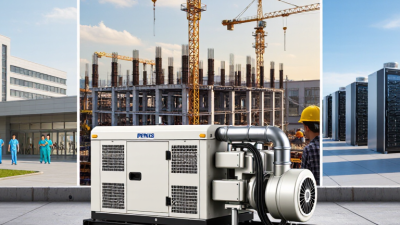
China’s generator-set market is becoming more demanding, not merely larger. The IEA’s Electricity 2024 report expects global electricity demand to grow strongly through 2026, with China driving much of that expansion. Grand View Research also forecasts continued growth in the global diesel generator-set market through 2030. These trends increase demand for dependable backup power in factories, hospitals, construction sites, data centers, and remote projects.
Fatih Birol, Executive Director of the International Energy Agency, observed, “The age of electricity is upon us.” His statement explains why a Perkins Generator Set must deliver more than engine performance. Buyers need stable voltage, verified fuel consumption, fast starting, and accessible service support. In China, leading suppliers should therefore be assessed through documented factory experience, Perkins authorization, load-bank testing, emissions compliance, and spare-parts availability. A polished website is not enough.
No supplier is perfect.
This guide examines China-based Perkins Generator Set suppliers through practical purchasing criteria. It considers manufacturing capability, customization, quality control, export experience, warranty response, and technician coverage. Real projects often reveal weaknesses hidden by brochures. A supplier may offer an attractive price, yet struggle with remote troubleshooting or replacement parts. Another may provide excellent engineering, but lack flexible delivery schedules. Therefore, identifying the “top” supplier requires evidence, not popularity alone. The comparison that follows aims to help distributors, contractors, and industrial buyers make a more reliable decision. Still, specifications can change, and independent verification remains necessary before signing any purchase agreement.
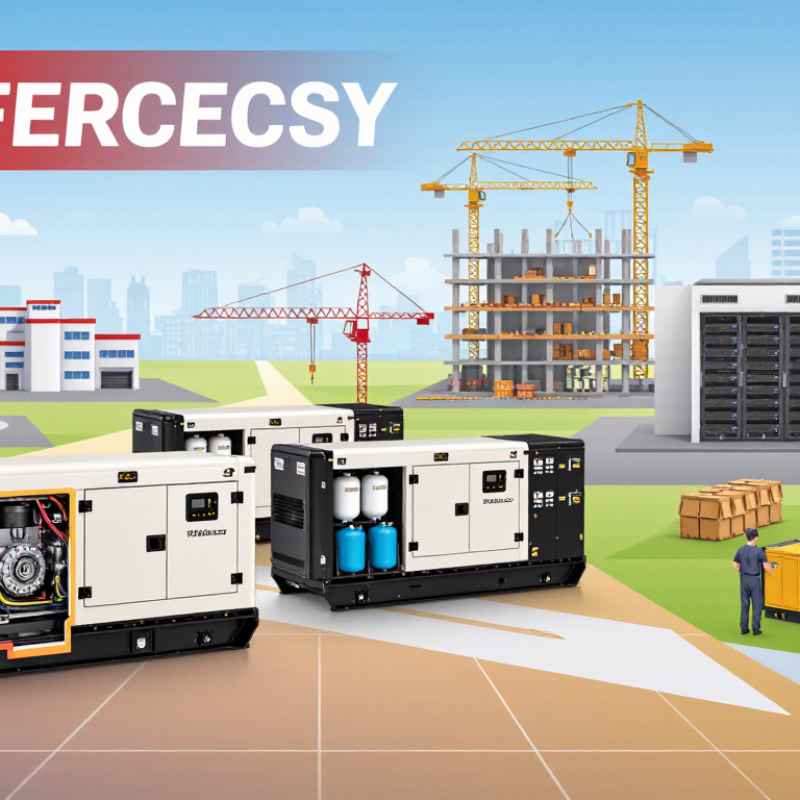
China-based Perkins generator set suppliers can cover a wide power range from 7.5 to 2,250 kVA. This range suits small offices, retail sites, construction projects, hospitals, and industrial facilities. Smaller sets usually support lighting, pumps, and communication equipment. Larger units can serve factories, data centers, and prime-power applications. Buyers should confirm whether the quoted rating is standby, prime, or continuous.
Reliable suppliers provide more than a nameplate and a price. They should offer load-bank testing, wiring diagrams, fuel-consumption data, noise measurements, and clear warranty terms. Ask about alternator options, controller functions, enclosure design, and synchronization capability. Local service capacity also matters. A low purchase price can become expensive when filters, spare parts, or trained technicians are difficult to obtain. A broad product range sounds impressive, but it does not guarantee equal support across every kVA class.
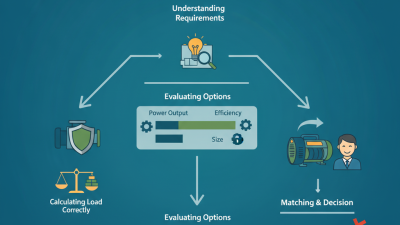
Tips: Request a site-load calculation before choosing a model. Leave reasonable capacity for motor starting and future expansion. Check the actual dimensions, lifting points, fuel-tank capacity, and exhaust requirements. Ask for test records from the same output class, not only a smaller unit. One detail is often missed: transport access. A 2,250 kVA set may fit the specification but fail the delivery route. Suppliers should also explain maintenance intervals in practical terms. Their answers may not be perfect, so record assumptions and verify them before signing.
Choosing a China-based generator set supplier requires more than checking production photos. ISO Survey 2023 reported over 1.2 million ISO 9001 certificates worldwide. Yet certification alone does not prove consistent generator performance. Ask for the certificate number, valid scope, issuing body, and latest surveillance record. The scope should cover generator design, assembly, or testing, not only general trading activities.
CE evidence needs careful review. CE marking is a manufacturer’s conformity declaration, not automatically an independent quality certificate. Request the EU Declaration of Conformity, applicable directives, harmonized standards, and technical-file index. For diesel generator sets, references to electrical safety, electromagnetic compatibility, and emissions requirements should match the supplied configuration. Factory-test records should show serial number, test date, rated voltage, frequency, power factor, oil pressure, coolant temperature, and alarm results. Load-bank results at 25%, 50%, 75%, and 100% reveal more than a polished brochure. Small gaps matter.
Tips: Compare three recent reports from different production dates. Check calibration dates on meters. Review raw readings, not only pass stamps. A missing witness signature is not fatal, but repeated omissions deserve questions. Supplier audits also benefit from video calls inside the test bay, with nameplates and control screens visible. Industry guidance on ISO 8528 supports standardized performance testing, but supplier records may still be incomplete. That is an uncomfortable reality. Qualification should record both evidence and uncertainty.
What Are the Top China Perkins Generator Set Suppliers?
For buyers comparing Chinese generator set suppliers, power ratings deserve more attention than factory size. ISO 8528-1:2018 separates continuous, prime, limited-time, and emergency standby applications. Prime power supports variable loads for unlimited annual hours, while standby power covers outages and usually allows limited operating hours. These ratings are not interchangeable.
Read the load profile carefully.
A data center may require standby capacity, while a construction site often needs prime capacity. A 500 kVA standby set may deliver less under continuous operation. Misreading this difference can shorten engine life and increase fuel costs. The International Energy Agency’s Electricity 2024 report expects global electricity demand to grow by about 3.2% annually from 2024 to 2026. That growth makes dependable backup and temporary power increasingly important.
Frequency creates another practical boundary. A four-pole alternator normally runs at 1,500 rpm for 50 Hz and 1,800 rpm for 60 Hz. A two-pole design typically runs at 3,000 or 3,600 rpm. Voltage, phase arrangement, and local grid rules must also match. Do not accept “dual-frequency” claims without checking derating tables, control settings, and test records. I have seen specifications that looked complete but omitted ambient temperature. That omission matters in hot, dusty sites. Ask suppliers for ISO-based test documentation, measured fuel consumption, load-step results, warranty terms, and service response times. The cheapest quotation is sometimes the least predictable.
| Evaluation Dimension | Prime Power (PRP) | Standby Power (ESP) | 50 Hz Configuration | 60 Hz Configuration | Supplier Verification Point |
|---|---|---|---|---|---|
| Primary purpose | Continuous or variable-load power where the utility supply is unavailable or unreliable. | Emergency backup power during utility outages. | Common in most of Europe, Africa, Asia, Australia, and many other markets. | Common in North America and selected markets in Latin America and Asia. | The supplier should match the generator set to the intended grid standard and application. |
| Load profile | Variable load is permitted. The average load factor and maximum step load must remain within the manufacturer’s limits. | Typically variable load for the duration of an emergency, subject to the published rating and operating limits. | Frequency is 50 cycles per second; connected equipment must be compatible with 50 Hz. | Frequency is 60 cycles per second; connected equipment must be compatible with 60 Hz. | Request load-bank or factory-test evidence covering voltage, frequency, response, and transient performance. |
| Operating duration | Designed for extended operation, provided maintenance intervals, fuel supply, cooling, and loading requirements are met. | Designed for outage periods and periodic testing rather than routine continuous operation. | Duration depends on fuel-tank capacity, site logistics, and the project’s autonomy requirement. | Duration depends on fuel-tank capacity, site logistics, and the project’s autonomy requirement. | Confirm fuel-consumption data at the required load points and the proposed refueling plan. |
| Overload capability | Some ISO-based prime ratings allow a limited temporary overload, commonly up to 10% for a defined period, when stated by the manufacturer. | Normally no overload is permitted unless the rating documentation specifically states otherwise. | Overload performance is determined by the complete 50 Hz package and its control system. | Overload performance is determined by the complete 60 Hz package and its control system. | Do not infer overload capacity from the kW or kVA nameplate; require written rating conditions. |
| Typical application | Construction sites, remote facilities, rental fleets, industrial plants, and locations with frequent grid interruptions. | Hospitals, data rooms, commercial buildings, telecommunications sites, and life-safety systems. | Projects whose electrical equipment and utility supply are designed for 50 Hz operation. | Projects whose electrical equipment and utility supply are designed for 60 Hz operation. | A qualified supplier should provide application-specific sizing rather than selecting only by maximum output. |
| Voltage and phase | Available voltage, phase, neutral arrangement, and alternator connection depend on the selected configuration. | Available voltage, phase, neutral arrangement, and alternator connection depend on the selected configuration. | Common three-phase systems include 400/230 V, but the actual requirement must be confirmed locally. | Common three-phase systems include 480/277 V or 208/120 V, but the actual requirement must be confirmed locally. | Check the single-line diagram, phase sequence, neutral grounding, breaker rating, and automatic transfer-switch compatibility. |
| Applicable reference | ISO 8528-1 is commonly used to classify generator-set power ratings and operating characteristics. | ISO 8528-1 commonly identifies emergency standby power as a separate rating category. | The project may also require local electrical, emissions, safety, and grid-interconnection rules. | The project may also require local electrical, emissions, safety, and grid-interconnection rules. | Ask for the exact test standard, certification scope, and conformity documents supplied with the unit. |
| Environmental derating | High altitude, high ambient temperature, humidity, dust, and restricted airflow can reduce available output. | The same environmental factors can reduce emergency output and affect starting reliability. | Frequency does not remove the need for site-specific derating calculations. | Frequency does not remove the need for site-specific derating calculations. | Require a signed derating curve for the site elevation, design temperature, enclosure, and cooling arrangement. |
| Supplier selection benchmark | Look for documented prime-rating conditions, service capability, spare-parts planning, and verified fuel-consumption data. | Look for rapid-response service, automatic-start testing, transfer-switch integration, and maintenance support. | Confirm 50 Hz factory configuration, local compliance, voltage compatibility, and commissioning support. | Confirm 60 Hz factory configuration, local compliance, voltage compatibility, and commissioning support. | Compare technical compliance, lifecycle cost, warranty terms, delivery schedule, documentation quality, and after-sales coverage. |
China’s leading generator-set suppliers should be compared through measured fuel use, warranty terms, and delivery performance. For a 500 kVA diesel set, engineering benchmarks often show 0.23–0.30 litres per kWh at 75% load. Actual consumption changes with altitude, maintenance, and load variation. ISO 8528-5 supports consistent testing, but buyers should request certified test sheets, not catalogue estimates. The IEA Electricity 2024 report expects global electricity demand to rise by about 4% in 2024. Reliable backup equipment therefore needs predictable operating costs.
Warranty length commonly ranges from 12 to 24 months, while stronger offers may include operating-hour limits and remote technical support. Read the exclusions carefully. Some warranties cover parts, but exclude labour, transport, or installation faults. Lead time is equally important. Standard configurations may ship within four to eight weeks, while customised control panels can add several weeks. China’s manufacturing delivery conditions still fluctuate, and the World Bank’s April 2024 Commodity Markets Outlook projected a 2024 oil price near 84 dollars per barrel. Fuel budgets need realistic assumptions.
Tips: Ask for three load-point fuel readings, a written warranty matrix, and a dated production schedule. Confirm spare-parts availability before ordering. A shorter lead time may hide weaker factory testing. I would also inspect previous project records, although paperwork can be incomplete. That is an uncomfortable limitation. Reliability should be verified in the field, not assumed from a low quotation.
Anonymized market benchmarks for diesel generator set procurement
The benchmark uses typical published commercial ranges: approximately 95–110 L/h fuel consumption for a 500 kVA diesel set at full load, 12–24 months of standard warranty coverage, and 4–10 weeks for common production lead times. Actual values depend on configuration, testing requirements, customization, order volume, and shipping arrangements.
Choosing among China-based generator set suppliers requires more than comparing prices and engine specifications. After-sales capability often determines whether a project stays productive. Check whether the supplier maintains regional parts warehouses, not only a factory inventory. Ask for common replacement items, including filters, sensors, belts, injectors, and control modules. A delayed sensor can stop an otherwise healthy generator.
Response time should be measurable. Request service-level targets for remote diagnosis, technician dispatch, and emergency parts delivery. Reliable suppliers should provide maintenance records, failure reports, and clearly defined MTBF data. However, MTBF figures need context. Ask about operating loads, climate, service intervals, and test hours. A high number without testing conditions proves little. No supplier is perfect.
Tips: Ask for three recent customer references. Call them directly. Request a sample parts list and a written escalation process. During a factory or site visit, inspect service logs rather than polished presentations. Also check whether technicians understand synchronization, load sharing, cooling systems, and controller alarms. Practical knowledge matters.
A strong supplier will explain weaknesses honestly. For example, remote regions may require larger critical-parts stocks. That adds cost, but it can reduce downtime. Response promises should include weekends and holiday coverage. Some suppliers quote impressive MTBF results but cannot explain warranty-return patterns. That is a warning sign. Review quarterly failure trends, not just one successful installation. Small details often reveal after-sales maturity.