How to Choose the Right Perkins Generator Set?
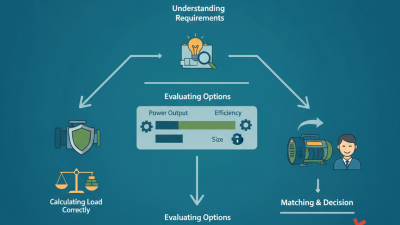
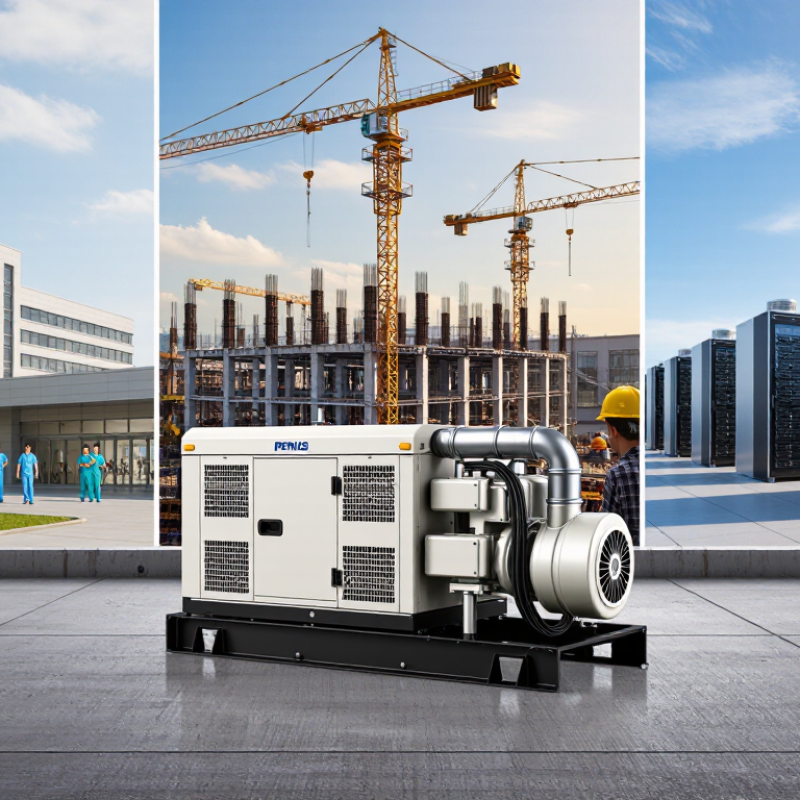
Choosing the right Perkins Generator Set begins with the load, not the price tag. A hospital, construction site, and data center demand different power strategies. Each has different starting currents, operating hours, and failure consequences.
The global generator-set market remains significant. Fortune Business Insights valued it at USD 30.75 billion in 2023. It projects the market to reach USD 43.57 billion by 2032. The International Energy Agency also expects data-center electricity use to exceed 1,000 TWh by 2026. These figures show stronger demand for dependable standby and prime power. They do not guarantee that every advertised set fits your site.
Tom Nankervis, former Perkins president, offered a practical principle: “The engine must be matched to the customer’s application.” That guidance deserves attention. A 500 kVA rating alone says little about performance under motor starting, altitude, heat, or uneven loads. Check the duty rating. Measure the real load profile. Confirm emissions compliance, fuel quality, service access, and control-system compatibility. Small details matter. A blocked radiator in a dusty yard can reduce output quickly. An undersized alternator can cause nuisance trips during pump startup.
Reports from Fortune Business Insights and MarketsandMarkets use different market boundaries, so their forecasts vary. That limitation is worth remembering. Market growth does not replace engineering judgment. The best Perkins Generator Set is the one that starts reliably, carries the actual load, and remains supportable throughout its working life. Sometimes, the cheapest option is not economical.
Define Duty Class: Standby, Prime, or Continuous per ISO 8528
Choosing the right generator set starts with duty class, not engine size. ISO 8528-1:2018 separates applications into Standby, Prime, and Continuous ratings. Standby power supports emergency loads during utility failure. It usually serves hospitals, offices, and data rooms for limited running hours. Prime power supports variable loads for extended periods, with maintenance intervals and load limits carefully managed. Continuous power is designed for steady loads and long-duration operation, often at remote sites or industrial facilities.
The difference matters. Uptime Institute’s 2023 Global Data Center Survey reported that 60% of respondents experienced an outage within the previous three years. That figure shows why emergency performance cannot replace correct duty planning. A standby-rated set may fail as an economical prime-power solution. Fuel quality, ambient temperature, altitude, and step-load response also change real output. ISO guidance is useful, but project specifications may impose stricter operating limits. That part is easy to overlook.
Tips:
List the actual load profile before comparing models. Record running load, starting current, hours per year, and required autonomy. Ask whether the site needs variable-load prime power or constant-load continuous power. Include a reserve margin, but avoid excessive oversizing; lightly loaded engines can accumulate deposits and perform poorly. Have a qualified engineer verify the final rating, ventilation, emissions requirements, and maintenance plan. Metrics look clean on paper. Field conditions are not.
Match Output: Compare Perkins Ratings at 50/60 Hz and 400/480 V
Choosing the right generator set starts with matching the electrical output to the site, not simply choosing the largest engine. Compare published ratings at both 50 Hz and 60 Hz. A set may deliver different kilowatts at each frequency because speed and alternator design change.
Voltage matters just as much. A 400 V system is common in many industrial installations, while 480 V equipment requires compatible insulation, protection, and distribution gear. Confirm whether the site uses three-phase power, the required frequency, and the actual power factor. A rating that looks suitable on paper can disappoint after motor starting loads are added.
Check the duty rating carefully. Prime power supports changing loads, while standby power normally covers emergency operation. Review the expected load profile, largest motor, altitude, ambient temperature, and future expansion. These conditions can reduce available output. Leave practical headroom.
I once saw a selection based only on running watts. The starting current was overlooked. That caused avoidable nuisance trips during commissioning. Measure real demand where possible, then compare continuous and transient performance with the transfer switch and protection system. Ask for test data at the required 50/60 Hz and 400/480 V conditions. Do not assume one rating applies everywhere. The installation drawings, site measurements, and local electrical requirements should agree before procurement.
Check Compliance: Meet Tier 4 Final/Stage V and 70 dB(A) Noise Targets
When choosing a generator set, emissions compliance should be checked before output and price. Confirm whether the project requires Tier 4 Final or Stage V certification. These standards control pollutants such as nitrogen oxides, particulate matter, and carbon monoxide. Ask for official certificates, not only sales claims. Verify the engine rating, approval category, and intended operating conditions.
Noise performance needs the same attention. A 70 dB(A) target can change with distance, load, weather, and measurement method. Request test data showing the distance and operating percentage. A reading taken at seven metres may not match a reading beside a hospital wall. Check the enclosure, exhaust silencer, cooling fan, and vibration mounts. Small installation details matter.
In field inspections, I look at the actual site before selecting the set. Nearby apartments, reflective walls, and nighttime operation can create unexpected complaints. A quieter enclosure may also restrict airflow if poorly designed. That trade-off deserves review. Not every published value is directly comparable. Confirm local requirements with a qualified engineer and an accredited testing body. Keep maintenance records, because blocked filters and worn silencers can increase emissions and noise. Test again after installation. It is easy to overlook this step.
Compare Ownership: Assess g/kWh Fuel Use, Service, and 10-Year TCO
Choosing a generator set starts with ownership, not the lowest purchase price.
Compare fuel use in g/kWh at 25%, 50%, 75%, and 100% load.
U.S. Department of Energy FEMP guidance shows diesel generator efficiency changes sharply at partial load.
A set rated at 0.25 L/kWh may approach 0.35 L/kWh during light operation.
That difference quietly grows every month.
Measure real site loads, not only the nameplate rating.
Build a ten-year TCO model with fuel, scheduled service, coolant, batteries, filters, load-bank testing, and major overhaul costs.
The U.S. Energy Information Administration’s Short-Term Energy Outlook confirms that diesel prices can move significantly across regions and time.
Use low, median, and high fuel-price cases.
A spreadsheet with one fuel price is too neat. It can mislead.
Include technician travel, emergency callouts, and the cost of unavailable power.
Service quality deserves equal weight.
Ask for documented response times, parts availability, maintenance intervals, and technician qualifications.
ISO 8528-based testing practices can help verify load performance and transient response.
Record fuel consumption during a witnessed test, preferably with calibrated instruments.
Then compare measured g/kWh against the supplier’s curve.
Small errors matter over 10 years.
I would also price battery replacement and exhaust-system work separately; these items are often forgotten.
The cheapest set may become expensive when service access is poor.