Welcome to our websites!
nybjtp

China Top Generator Set Suppliers for Global Buyers

China’s generator manufacturing sector has become a major sourcing base for international power projects. Its suppliers serve construction sites, hospitals, data centers, mining operations, and emergency facilities. The International Energy Agency’s Electricity 2024 report projects average global electricity demand growth of about 4% annually from 2024 to 2026. This trend keeps dependable backup power commercially important.

The Generator Set market is not judged by engine size alone. Buyers must examine fuel consumption, alternator quality, controller functions, noise levels, emissions compliance, and after-sales support. ISO 8528 provides an important technical reference for reciprocating engine-driven generating sets. Independent market reports, including studies from MarketsandMarkets and Grand View Research, also identify data centers, industrial expansion, and standby power demand as key growth drivers. However, their market definitions differ. Their forecasts should not be treated as exact procurement budgets.

Leading Chinese suppliers often compete through broad model ranges, competitive pricing, customization, and export experience. Yet a low quotation can hide longer lead times, limited spare parts, or weak commissioning support. No supplier is perfect. That matters more than promotional claims. Global buyers should verify factory certificates, load-test records, warranty terms, service response times, and references from comparable projects. A practical evaluation may include a 500 kVA unit, diesel consumption at 75% load, and the availability of critical filters within one week. This guide examines China’s top Generator Set suppliers through technical capability, manufacturing consistency, certification readiness, and international service networks. It also considers a difficult question: does the supplier remain reliable after the equipment reaches a remote site?
China Top Generator Set Suppliers for Global Buyers

China’s Generator Set Industry: Scope, Products, and Global Role

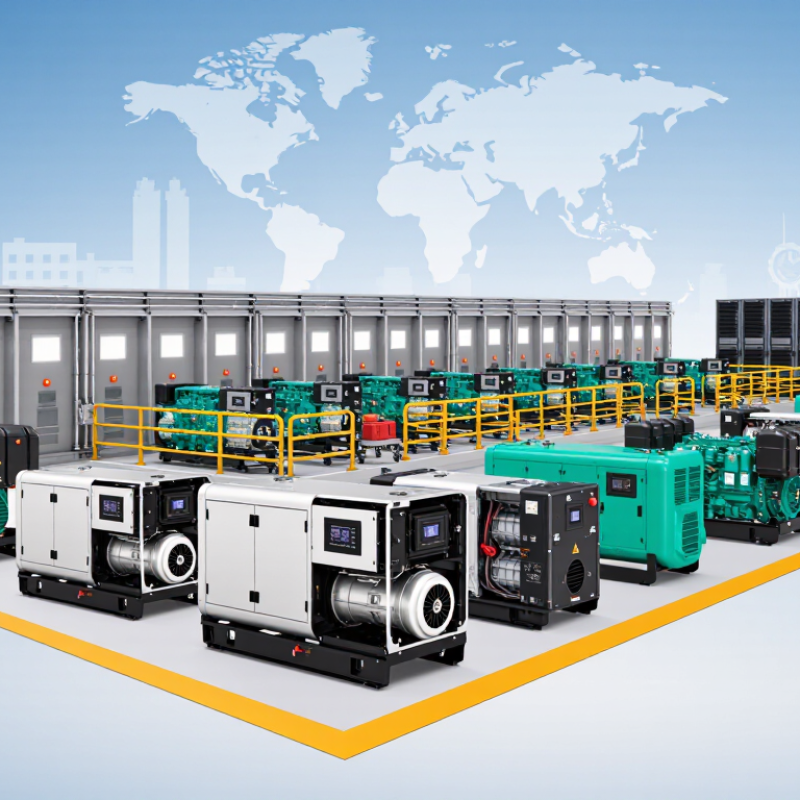
China’s generator set industry covers diesel, natural gas, dual-fuel, mobile, containerized, and standby systems. Its applications range from construction sites and hospitals to ports, factories, telecom towers, and data centers. The International Energy Agency’s Electricity 2024 report forecasts global electricity demand growth of about 3.4% annually from 2024 to 2026. This creates continuing demand for dependable backup and distributed power.

China’s supply base combines engine production, alternators, control panels, cooling systems, and metal fabrication. Exporters often provide compact units below 100 kVA, heavy industrial sets above 1,000 kVA, and synchronized systems for larger facilities. UN Comtrade data for HS 8502 shows China remains one of the major global exporters of generating sets. However, customs totals combine different technologies and capacities. Export value alone can mislead.

Technical buyers should examine prime power ratings, emergency standby ratings, altitude derating, fuel consumption, noise levels, and emissions documentation. ISO 8528 testing, load-bank verification, and documented factory acceptance procedures improve purchasing confidence. These details matter in hot warehouses or remote mines. Small omissions become expensive later.

China’s global role also depends on logistics, spare-parts access, remote monitoring, and local service training. The World Bank’s Logistics Performance Index highlights how delivery reliability affects international equipment supply. Price remains influential, but it is not the whole decision. Some specifications still need clearer disclosure, especially long-term fuel performance and field reliability. That deserves careful review.

China’s Generator Set Industry: Scope, Products, and Global Role

Representative rated-output reference points across major generator set applications. China’s generator set industry covers portable, standby, prime-power, critical-power, and utility-scale products for construction, telecommunications, healthcare, data centers, manufacturing, and infrastructure projects worldwide. The figures indicate typical product positioning rather than company or brand sales data.

Key Generator Set Types and Their Main Applications

China Top Generator Set Suppliers for Global Buyers

Key Generator Set Types and Their Main Applications

Diesel generator sets remain practical for construction sites, hospitals, factories, and remote projects. They deliver strong torque and stable output under changing loads.

A standby unit starts during grid failures, while a prime unit supplies regular power where utility service is weak or unavailable. Continuous-duty models support steady loads for long operating periods.

The difference matters. Selecting by rated kilowatts alone can cause overheating, poor fuel economy, or nuisance shutdowns.

Gas generator sets suit facilities with reliable natural gas or biogas access. They often serve commercial buildings, data rooms, food plants, and combined heat-and-power systems.

Cleaner combustion may support stricter emissions goals, but gas pressure requires verification. Dual-fuel sets add flexibility when fuel availability changes.

They are not automatically the best choice. Site conditions decide.

Portable generator sets support roadwork, outdoor events, agricultural equipment, and temporary workshops. Enclosed versions reduce noise and protect controls from rain, yet ventilation remains essential.

Automatic transfer systems help standby sets respond quickly, but commissioning should include real load testing.

In my field observations, many buyers underestimate altitude, cold starts, cable length, and maintenance access. That oversight is costly.

A reliable supplier should provide load data, test records, wiring guidance, spare-parts planning, and clear service intervals.

I would also question specifications that hide power factor, allowable overload, or acoustic measurements.

How to Evaluate Chinese Generator Set Suppliers

Choosing Chinese generator set suppliers requires more than comparing quoted prices. The IEA’s Electricity 2024 report estimates that global data-centre electricity consumption could exceed 1,000 TWh by 2026. This growth raises expectations for standby reliability, fuel efficiency, and rapid load response. Ask suppliers for engine and alternator specifications, ISO 8528 performance data, factory test records, and verified load-bank results. A serious supplier should explain voltage regulation, frequency stability, noise levels, and performance at 25%, 50%, and 100% load. Avoid vague claims.

Audit the factory, or appoint an independent inspection agency. Check production traceability, welding quality, control-panel wiring, spare-parts storage, and technician training. The World Bank’s Logistics Performance Index 2023 highlights the importance of shipment reliability, customs handling, and supply-chain visibility. These factors affect project risk after the sale. Request references from installations with similar climate, altitude, and duty cycles. Review warranty exclusions carefully, especially for batteries, cooling systems, and remote monitoring equipment. Ask for a written response-time commitment.

Certification alone is not enough.

Confirm whether reports come from accredited laboratories and match the exact configuration being purchased. A supplier may present excellent prototype results, while production units vary. That uncomfortable possibility deserves attention. I would also test one completed unit before placing a large order. This costs more initially, but it can reveal unstable controls, poor cable termination, or inadequate cooling. Supplier evaluation remains partly technical and partly practical: transparent communication, documented corrective actions, and accessible service support often matter more than a polished showroom.

China Top Generator Set Suppliers for Global Buyers - How to Evaluate Chinese Generator Set Suppliers
Evaluation Dimension What Global Buyers Should Verify Practical Benchmark or Evidence Suggested Weight Priority
Product Power Range Confirm whether the supplier can provide the required standby and prime power ratings for the project. Available ratings should cover the project load, starting current, ambient conditions, and future capacity margin. 10% High
Applicable Standards Check compliance with the standards and grid, safety, and emissions requirements applicable in the destination market. Request current test reports, conformity documents, wiring diagrams, and certificates relevant to the target country. 12% High
Engine and Alternator Compatibility Evaluate the technical matching of the engine, alternator, controller, cooling system, and generator protection system. The supplier should provide complete technical specifications, voltage, frequency, phase, power factor, and speed data. 10% High
Fuel Consumption Compare fuel consumption at different load levels instead of relying only on a single full-load figure. Obtain fuel-consumption data at 25%, 50%, 75%, and 100% load, with the test conditions clearly stated. 8% High
Voltage and Frequency Stability Assess performance when the load changes, especially for hospitals, data centers, factories, and other sensitive applications. Review transient response, voltage regulation, frequency regulation, and load-step test results. 10% High
Noise and Emissions Control Verify whether the enclosure, exhaust system, acoustic treatment, and emissions configuration suit the installation environment. Request sound-pressure readings with the measurement distance and operating load specified, plus emissions documentation where required. 7% Medium
Factory Quality Control Review incoming inspection, assembly control, electrical testing, load-bank testing, and final inspection procedures. A credible supplier should provide a documented quality process and a test report for each delivered unit or production batch. 10% High
Customization Capability Determine whether the supplier can adapt fuel tanks, enclosures, control panels, cable entry, ATS integration, and operating conditions. Confirm the scope, engineering drawings, approval process, minimum order quantity, and cost impact before signing. 7% Medium
Lead Time and Production Capacity Evaluate the supplier’s ability to meet the project schedule, including production, testing, packing, and export preparation. Request a written production schedule, estimated dispatch date, capacity confirmation, and delay-management procedure. 8% High
Spare Parts Availability Check access to routine maintenance parts and critical components after delivery. Request a recommended two-year spare-parts list, part numbers, prices, stock policy, and normal delivery time. 8% High
Warranty and Technical Support Review warranty duration, exclusions, response time, troubleshooting support, and responsibility for replacement parts or labor. Warranty terms should be written in the contract and should identify claim procedures, documentation, and service contacts. 8% High
Export and Packaging Experience Verify whether the supplier can prepare equipment for international transport and provide accurate shipping documents. Check packing specifications, lifting points, moisture protection, export documentation, HS classification, and Incoterms. 5% Medium
Total Cost of Ownership Compare purchase price with fuel, maintenance, spare parts, installation, logistics, and expected operating costs. Use a multi-year cost model rather than selecting solely on the lowest initial quotation. 10% High
Reference Verification Validate the supplier’s experience with similar power ratings, operating environments, industries, and export destinations. Request verifiable project references, operating feedback, delivery records, and permission for reasonable due diligence. 5% Medium
Recommended evaluation method: score each dimension from 1 to 5, multiply the score by the suggested weight, and require documentary evidence for all high-priority items before making a supplier decision.

Manufacturing Standards, Certifications, and Quality Control

For global buyers, generator quality begins with a documented manufacturing system. ISO Survey 2023 recorded 1,265,216 ISO 9001 certificates worldwide, showing the scale of certified quality management. Yet certification alone proves little. Buyers should check calibration records, supplier audits, material certificates, and corrective-action reports. ISO 8528 testing should cover rated output, frequency stability, voltage response, and load acceptance.

Factory acceptance testing makes performance visible. Technicians should connect resistive and reactive load banks, then record results at 25%, 50%, 75%, and 100% load. Temperature, oil pressure, exhaust condition, and vibration require clear limits. IEC 60034 requirements also support safer assessment of alternators and electrical performance. Photos, serial-number tracking, and signed test sheets improve traceability across international shipments.

Compliance must match the destination market. NFPA 110 may guide emergency power expectations, while local emissions, noise, and electrical rules still require verification. Uptime Institute’s 2024 Annual Outage Analysis reported that 54% of respondents experienced outages costing more than $100,000. That figure makes quality control a financial issue, not only a technical one. A practical weakness remains: some buyers accept scanned certificates without checking scope or expiry. That shortcut is risky. Good suppliers welcome witnessed testing, but no factory process is perfect; independent inspection can still reveal loose terminals, incomplete manuals, or missing spare parts.

Export Services, Pricing Factors, and Buyer Considerations

China Top Generator Set Suppliers for Global Buyers

Export Services, Pricing Factors, and Buyer Considerations

Reliable generator set sourcing requires more than comparing factory quotations. Experienced suppliers should confirm output, fuel type, frequency, voltage, and local certification needs. A 400V, 50Hz unit may not suit a 60Hz site. Ask for load calculations, test records, wiring diagrams, and clear warranty terms. Export support should include safe packing, shipping documents, spare parts planning, and responsive technical communication. CIF and FOB prices can differ greatly after freight, insurance, and destination charges.

Pricing depends on engine capacity, alternator quality, control systems, noise reduction, fuel tanks, and customization. A low quote can look attractive. Yet missing breakers, batteries, or delivery costs may create surprises. Request an itemized quotation with currency, lead time, payment schedule, and inspection scope. Suppliers with stable production records and documented quality procedures usually reduce purchasing risks. Still, no supplier is perfect; unclear technical details can remain a costly weakness.

Tips: Share your load profile, site photos, altitude, climate, and expected running hours. Confirm whether the enclosure fits through the installation entrance. Compare total ownership cost, not only purchase price. Keep written records of every specification. A sample factory test is useful, but it cannot replace checking local service coverage and replacement-part availability.