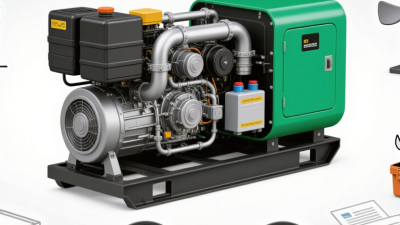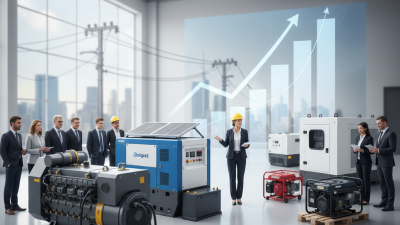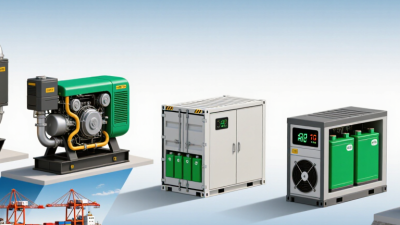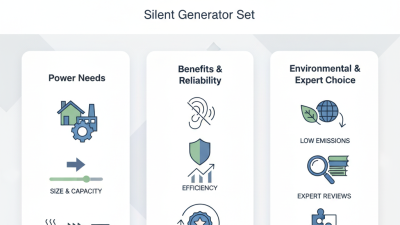
Choosing among the 5 Best Cummins Generator Sets for Global Buyers requires more than comparing engine horsepower. A dependable Cummens Generator Set must match the site’s climate, fuel quality, operating schedule, and maintenance resources. A unit serving a remote mine faces different demands from one protecting a city hospital. Salt air, dust, unstable grids, and limited technician access can quietly change the buying decision.
Tom Linebarger, former Cummins chairman and CEO, often framed the company’s purpose this way: “Making people’s lives better by powering a more prosperous world.” That idea gives this comparison a practical direction. Reliable power is not just a specification. It keeps refrigerated food cold, production lines moving, and emergency rooms prepared. Small details matter.
The models in this guide are examined through real purchasing concerns. These include standby performance, prime-power endurance, fuel consumption, emissions compliance, control-system usability, and worldwide service support. We also consider generator size, enclosure design, noise, and parts availability. A powerful set may still be a poor choice if local support is weak. That is easy to overlook.
No single generator fits every buyer. A technically impressive unit can disappoint under the wrong load profile. Buyers should verify regional regulations and site conditions before ordering. This review aims to make that process clearer, while admitting one limitation: published specifications cannot fully replace a field assessment. Expect useful comparisons, not a perfect answer.
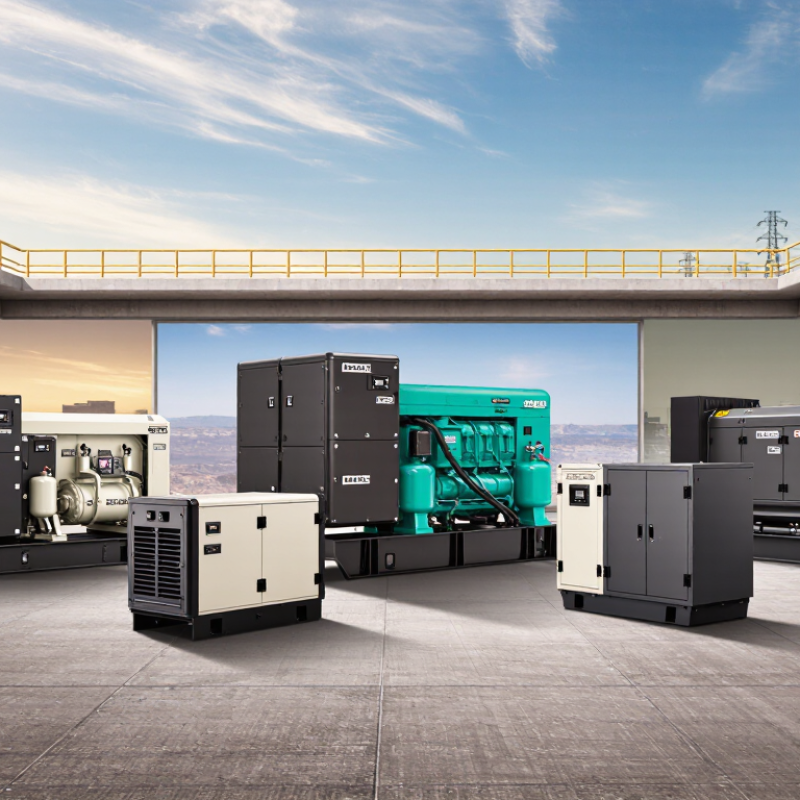
Global buyers judge generator sets by more than rated kilowatts. The International Energy Agency’s Electricity 2024 report projects data-center electricity use to exceed 1,000 TWh by 2026, up from about 460 TWh in 2022. This growth increases demand for fast starting, stable frequency, and reliable load acceptance. ISO 8528 performance classes help compare voltage recovery and transient response.
Fuel quality, heat, dust, and altitude also affect performance. A 500 kVA set may need derating at a hot inland site. Specifications should state these limits clearly.
Emissions compliance is equally important. IEA analysis shows rising electricity demand is increasing pressure on grid reliability. Buyers must check local emissions limits, noise rules, testing requirements, and fuel-storage restrictions. Remote monitoring should record alarms, run hours, battery voltage, and service history. Cybersecurity is often overlooked. That is risky. Redundancy also requires practical testing; two units may still share one weak fuel line.
Tips: Request a witnessed load-bank test, cold-start record, and factory performance curve. Compare ten-year ownership costs, not only purchase price. Keep filters and batteries near the site. Ask for service response times in writing. Uptime Institute’s 2024 outage analysis continues to identify power problems as a major outage factor. Altitude derating is another overlooked detail. Buyer assumptions can be wrong.
Comparing five leading generator-set models requires more than reading their maximum output. Check prime and standby ratings against the site’s real load profile. A 500 kVA unit may appear suitable, yet motor starting currents can cause voltage dips. Measure actual demand.
Fuel consumption deserves close attention. Compare litres per hour at 25%, 50%, 75%, and full load. A model with slightly lower purchase cost may consume more fuel during long outages. Inspect the alternator design, voltage regulation, controller functions, and battery-charging system. These details affect stability in hospitals, factories, and remote worksites.
Site conditions matter greatly. Review altitude derating, ambient temperature limits, enclosure airflow, noise levels, and available space. A compact set can simplify installation, but restricted airflow may increase engine temperature. Check service access too. Technicians need room around filters, belts, and terminals. Not every comparison sheet shows this.
A clean spreadsheet can still mislead. Ask for verified test records, warranty terms, spare-parts lead times, and local service capacity. Compare emissions compliance with the destination country’s current rules, not an old project document. Controls also deserve a practical test: simulate a load step and observe recovery time. Small assumptions remain risky. The quietest model may not be the easiest to maintain, and the cheapest option may become expensive after one difficult season.
The best generator sets depend on the size, stability, and location of the load. For small power demands, compact diesel sets suit shops, farms, and temporary work sites. They can run lighting, pumps, refrigeration, and basic tools. Check starting current carefully. A small motor may briefly demand three times its running power.
Medium-duty sets fit workshops, clinics, offices, and apartment buildings. Choose prime-rated equipment when outages may last for days. Standby-rated equipment works better when the utility supply is normally dependable. Automatic transfer controls can restore power within seconds. In my experience, many buyers underestimate ventilation needs. Heat, dust, and poor airflow can reduce performance quickly.
Large power demands require parallel generator sets, larger fuel systems, and stronger distribution panels. Factories, mines, hospitals, and data facilities often need redundancy. One set can remain available while another carries the load. Load-bank testing is essential before critical operation. It exposes weak batteries, unstable voltage, and cooling problems. The biggest set is not always the best choice. Oversizing can cause light-load issues and inefficient fuel use.
Tips: Record actual running loads for one week. Include motor starting demand. Leave a modest capacity margin, but avoid excessive oversizing. Ask a qualified technician to review altitude, ambient temperature, fuel quality, noise limits, and local installation rules. Recheck the plan after expansion. Power needs change faster than expected.
Global buyers should compare five generator-set configurations by regional standards, fuel access, and installation conditions, not by rated power alone.
The IEA’s Electricity 2024 report forecasts global electricity demand growth of about 3.4% annually through 2026. That makes dependable standby capacity increasingly important.
For European projects, check CE marking, emissions rules, and EN 60034 requirements. North American installations often require NFPA 110 planning, local electrical approval, and fuel-storage compliance. Other markets may apply IEC 60034 and national grid codes.
Diesel suits emergency duty and remote sites, while natural gas can reduce on-site storage needs where pipelines remain reliable. Biodiesel blends may work, but cold temperatures, storage age, and local approval require practical testing.
ISO 8528 ratings also matter: standby, prime, and continuous ratings are not interchangeable. A 500 kW standby unit may disappoint under repeated prime operation. It happens.
Tips:
Measure altitude, ambient temperature, cable distance, and load steps before selecting a set. Oversized equipment can run lightly loaded, encouraging wet stacking and maintenance problems.
Confirm local emissions limits, noise restrictions, transport access, and service-part availability. The World Bank’s Commodity Markets Outlook highlights continuing fuel-price uncertainty, so a dual-fuel strategy may deserve evaluation.
Still, gas infrastructure is not automatically resilient. A site survey should challenge the original specification.
Selecting the right generator set starts with the load, not the catalogue.
For offices, clinics, and retail sites, a standby-rated set may cover short outages. Prime-rated equipment suits construction, farms, and weak-grid locations. Continuous-rated units fit remote operations with stable, long-running demand. Mobile sets add flexibility for roadwork and emergency teams. Hybrid-ready systems can reduce fuel use when paired with batteries. The fifth option is a high-capacity set for hospitals, factories, and data facilities. It needs careful synchronization.
Measure real demand first. List motors, pumps, compressors, lighting, and future expansion. Starting current can briefly exceed running power by several times. A 400 kVA load may require a larger frame if large motors start together. IEA’s Electricity 2024 report says data-centre electricity use could exceed 1,000 TWh globally by 2026. That pressure makes dependable backup increasingly important.
Site conditions matter just as much. High altitude, 45°C heat, dust, salt air, and poor fuel storage can reduce output and reliability. ISO 8528 ratings help buyers compare performance, but rating labels are not enough. Ask for derating curves, fuel consumption at 25%, 50%, and 75% load, noise data, and service intervals. Sometimes, the cheaper set is the wrong set. I have seen projects oversize equipment, causing wet stacking, low efficiency, and unnecessary maintenance. A small mistake in the load study can become a costly operational habit.
| Recommended Set Type | Typical Power Rating | Best-Fit Application | Prime / Standby Duty | Common Voltage & Frequency | Approx. Fuel Tank Runtime | Recommended Enclosure | Key Selection Advantage |
|---|---|---|---|---|---|---|---|
| Compact Standby Set | 20–40 kVA | Small offices, retail stores, homes and remote communication sites | Standby; generally up to 200 operating hours per year, subject to local requirements | 230/400 V or 240/415 V; 50 Hz 220/380 V or 480 V; 60 Hz |
Approximately 8–12 hours at 75% load | Weatherproof acoustic canopy | Low installation footprint, fast starting and economical backup power |
| Commercial Backup Set | 80–150 kVA | Hotels, supermarkets, schools, clinics and medium-sized commercial buildings | Standby or limited prime operation | 400/230 V, 50 Hz or 480/277 V, 60 Hz | Approximately 8–16 hours at 75% load | Sound-attenuated canopy or indoor radiator package | Good balance between capacity, fuel economy and service accessibility |
| Industrial Prime Set | 200–350 kVA | Factories, construction sites, agricultural processing and distributed power systems | Prime; suitable for variable loads and extended annual operation when correctly sized | 400/230 V, 50 Hz or 480 V, 60 Hz | Approximately 10–20 hours at 75% load | Heavy-duty weatherproof canopy or containerized system | Strong overload response and flexible operation in locations without a reliable grid |
| Large Facility Set | 400–750 kVA | Data centers, hospitals, large warehouses and critical infrastructure | Standby, prime or parallel operation with multiple sets | 400/230 V, 50 Hz; 480/277 V, 60 Hz; medium-voltage options may be available | Approximately 8–16 hours at 75% load | Acoustic canopy, indoor installation or ISO container | Supports automatic transfer, load sharing, redundancy and critical-load protection |
| Utility-Scale Modular Set | 800–2,000+ kVA per set | Mining operations, utility support, major infrastructure and large microgrids | Prime, continuous or standby operation using synchronized multiple sets | 400–690 V, 50/60 Hz; step-up transformer for higher distribution voltages | Approximately 8–24 hours at 75% load, depending on tank and site design | Containerized, indoor plant room or modular power station | Scalable capacity, improved redundancy and easier maintenance through modular design |
Note: Ratings, fuel consumption, runtime, dimensions, emissions compliance and available voltage configurations vary by engine, alternator, control system, ambient conditions and local regulations. Final selection should be confirmed using the approved technical datasheet and site load study.