Welcome to our websites!
nybjtp

How to Choose the Right Weichai Generator Set?

Choosing the right Weichai Generator Set requires more than comparing rated power and purchase price. The decision should begin with the site’s actual electrical behavior. Record the continuous load, motor-starting current, seasonal demand, and required backup duration. A 500 kVA set may support normal operations, yet struggle when pumps, compressors, or elevators start together.

The International Energy Agency’s Electricity 2024 report projects global electricity demand to grow by about 3.4% annually from 2024 to 2026. This trend increases pressure on factories, commercial buildings, and critical facilities to maintain dependable backup power. However, demand growth does not automatically justify oversizing. An oversized engine may operate inefficiently, waste fuel, and suffer from wet stacking during light loads. That detail is often missed.

Use ISO 8528 performance classifications when comparing generator ratings. Distinguish standby, prime, and continuous applications before reviewing a Weichai Generator Set specification. Then examine engine response, alternator quality, fuel consumption, cooling capacity, control systems, and automatic transfer-switch compatibility. Site conditions matter too. High altitude, tropical heat, dust, and limited ventilation can reduce available output.

Choose for the real site.

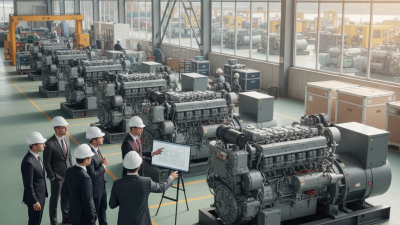
Weichai’s technical documentation should be checked against independent inspection records, local emission requirements, and the installer’s commissioning experience. Service access is equally important. A reliable set is not useful if filters, controllers, or replacement parts remain unavailable during an outage. Buyers sometimes focus too heavily on the brand. That is understandable, but incomplete. The strongest choice combines verified performance, realistic load calculations, trained maintenance support, and a clear lifecycle-cost assessment.
How to Choose the Right Weichai Generator Set?

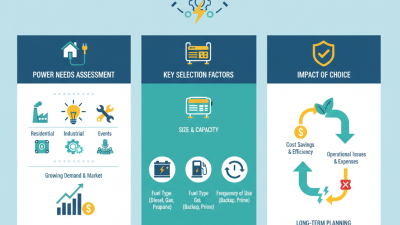
Understand Your Power Demand and Operating Conditions

How to Choose the Right Generator Set?

Understand Your Power Demand and Operating Conditions

Choosing a generator set begins with measured demand, not the largest available engine. Record running loads, starting currents, seasonal changes, and future expansion. Motors, pumps, and compressors may briefly require several times their rated power. A neat spreadsheet can still be wrong.

The International Energy Agency’s Electricity 2024 report estimates that data centres used about 460 TWh globally in 2022. It expects their demand to exceed 1,000 TWh by 2026. This growth shows why accurate load planning matters. Calculate continuous, essential, and temporary loads separately. Then select a suitable rating, such as standby, prime, or continuous power, according to ISO 8528 guidance.

Operating conditions can reduce real output. High altitude, hot air, humidity, dust, and poor ventilation affect engine performance and cooling. For example, a rooftop installation may face stronger heat exposure than a shaded equipment room. Check derating data for the actual site, not a standard brochure value. Fuel storage, noise limits, maintenance access, and transfer-switch performance also deserve attention.

Leave practical headroom, but avoid excessive oversizing. An underloaded engine may suffer from inefficient operation and carbon buildup. An oversized set may cost more and perform poorly at light loads. Site measurements are valuable. Assumptions need testing.

Compare Weichai Generator Set Types and Engine Options

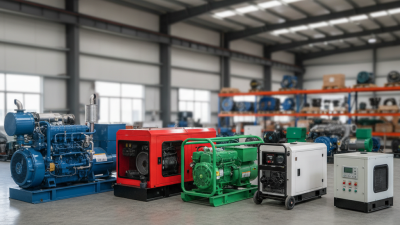
Choosing the right generator set starts with the duty profile, not the engine badge. Standby sets suit occasional outages in offices, homes, and small facilities. Prime sets handle variable loads at remote sites or during regular operation. Continuous-duty sets support steady demand, but they require accurate load planning. An open-frame design improves service access and cooling. A sound-attenuated enclosure better suits hospitals, hotels, and residential areas. Trailer-mounted sets add mobility, although transport and setup require extra planning. One size rarely fits every site.

Engine choice should follow load behavior, fuel access, altitude, and service conditions. Diesel engines suit demanding applications because they deliver strong torque and durable operation. Gas engines can reduce local noise and emissions, but their fuel supply must remain stable. Lower-speed engines often support long running hours. Higher-speed models may reduce initial equipment size. That trade-off is easy to overlook. I once focused too heavily on rated power and underestimated starting current from large pumps. The selection worked, but not comfortably.

Tips: Record the largest motor load before comparing engines. Check starting current, not only running watts. Match engine output with alternator capacity and controller features. Ask for verified fuel-consumption data at several load levels. Leave space for filters, cables, and maintenance access. Also review altitude and ambient temperature corrections. Small details matter.

How to Choose the Right Generator Set? Compare Generator Set Types and Engine Options

Comparison Dimension Open-Type Generator Set Silent / Acoustic Generator Set Containerized Generator Set Trailer-Mounted Generator Set
Best Application Plant rooms, workshops, and locations where noise control is not critical Commercial buildings, residential areas, schools, hospitals, and offices Construction sites, remote facilities, rental fleets, and harsh outdoor environments Temporary power, emergency response, roadwork, events, and mobile operations
Typical Power Range Approximately 10–3,000 kVA, depending on the configuration Approximately 10–1,500 kVA, depending on enclosure size and cooling design Approximately 100–3,000 kVA or higher for engineered projects Commonly 20–1,000 kVA for mobile applications
Noise Performance Highest noise level because the engine and alternator are exposed Reduced noise through acoustic panels, silencers, and vibration isolation Noise control depends on enclosure construction and site installation Usually moderate; an optional acoustic enclosure may be specified
Installation Requirement Requires a dedicated room, weather protection, ventilation, exhaust routing, and a fuel system Requires adequate airflow, access clearance, and correctly sized exhaust and fuel connections Requires a level foundation, lifting or transport planning, grounding, and site connections Requires suitable towing equipment, stable positioning, grounding, and safe cable routing
Main Advantage Lower initial cost and easy access for inspection and maintenance Better sound control and improved protection from dust and weather High protection, secure transport, modular installation, and improved environmental resistance Fast deployment and convenient movement between work locations
Main Limitation More exposed to weather and may require additional acoustic treatment Higher purchase cost and more restricted access to internal components Higher transport, foundation, and installation costs Limited space, road regulations, towing requirements, and exposure to vibration during transport
Recommended Selection Choose when budget, service access, and unrestricted ventilation are priorities Choose when local noise limits and occupant comfort are important Choose for long-term outdoor operation or demanding site conditions Choose when the power source must be relocated frequently

Engine Option Comparison

Engine Option Typical Speed Fuel Characteristics Strengths Best-Fit Scenario
Diesel Engine, 1,500 rpm 1,500 rpm at 50 Hz or 1,800 rpm at 60 Hz Generally efficient for continuous and standby operation Lower noise and wear than higher-speed designs; suitable for long operating hours Prime power, industrial loads, data centers, hospitals, and large commercial facilities
Diesel Engine, 3,000 rpm 3,000 rpm at 50 Hz or 3,600 rpm at 60 Hz Can provide a compact and economical package at lower ratings Compact dimensions, lower initial cost, and quick response for standby use Short-duration backup power, small commercial sites, workshops, and construction equipment
Gas Engine Varies by model and grid frequency Uses natural gas, biogas, or another approved gaseous fuel; requires a reliable supply Lower local emissions in many applications and cleaner combustion than diesel Facilities with stable gas infrastructure, combined heat and power, and emissions-sensitive sites
Electronic-Controlled Engine Depends on engine design and frequency requirement Fuel injection and operating parameters are managed electronically Precise control, diagnostic functions, improved load response, and easier monitoring integration Modern automatic systems, remote monitoring, variable loads, and emission-regulated markets
Mechanical-Controlled Engine Depends on engine design and frequency requirement Uses mechanically governed fuel and speed-control systems Simple service requirements and practical operation where advanced diagnostics are unavailable Remote areas, basic standby systems, and locations with limited technical support
Selection Checklist: Confirm the required prime or standby rating, voltage, frequency, phase, starting current, load profile, operating hours, ambient temperature, altitude, fuel availability, noise limits, emission requirements, installation space, maintenance access, and automatic transfer-switch compatibility before final specification.

Check Fuel Efficiency, Emissions, and Essential Performance Ratings

How to Choose the Right Generator Set?

Fuel efficiency should be checked at the loads your site actually uses. A generator running at 25% load may consume more fuel per kilowatt-hour than one operating near 75%. The U.S. Department of Energy lists diesel energy content at approximately 128,488 Btu per gallon. This supports a practical screening range of 0.24–0.30 liters per kilowatt-hour for modern diesel sets. Treat it only as a starting point. Request fuel curves at 25%, 50%, 75%, and 100% load, then verify them during commissioning with a calibrated load bank.

Emissions ratings deserve equal attention. The U.S. Environmental Protection Agency states that Tier 4 requirements can reduce particulate matter by about 50% and nitrogen oxides by up to 80% compared with Tier 3, depending on engine power. European projects may require Stage V compliance instead. Check the certificate, after-treatment system, and maintenance needs, not just the headline rating. A blocked filter or poor-quality fuel can increase downtime and emissions. Small details matter.

Performance ratings also affect reliability. ISO 8528-5 distinguishes operating classes, while standby, prime, and continuous ratings define different duty expectations. Match the rating to real demand, including motor starting currents and sudden load changes. Oversizing looks safe, but it can reduce efficiency and create wet-stacking problems. This choice is often underestimated. I would also compare noise levels, voltage regulation, frequency response, and service intervals before accepting the lowest purchase price.

Evaluate Installation Needs, Controls, Maintenance, and Support

How to Choose the Right Generator Set?

Installation conditions should guide generator selection, not the catalogue rating alone. Measure the continuous load, motor-starting surge, altitude, ambient temperature, and available ventilation. A unit rated for 1,000 kW at sea level may deliver less at a hot, elevated site. The U.S. Energy Information Administration’s Annual Energy Outlook 2023 projects continued growth in electricity demand from commercial and industrial facilities, increasing the value of dependable backup capacity. Leave room for future loads, but avoid excessive oversizing. It can reduce efficiency during light operation.

Controls deserve equal attention. Select a controller that records alarms, voltage, frequency, start attempts, and fuel status. Remote access helps, but a disconnected network can create false confidence. Uptime Institute’s 2023 Global Data Center Survey identified human error as a significant contributor to outages, so clear screens, simple procedures, and documented testing matter. Maintenance intervals should follow operating hours, fuel quality, and manufacturer guidance. Monthly visual checks should include leaks, battery condition, coolant level, exhaust restrictions, and enclosure damage. Load-bank testing can reveal weaknesses that a no-load start will miss.

Support is practical, not decorative. Confirm local parts availability, response times, technician training, and emergency coverage before purchase. ISO 8528 provides a useful framework for generator performance and ratings, yet site conditions still require engineering review. My own caution is simple: the cheapest service contract may become expensive after one failed start. Ask for maintenance records, test reports, and realistic recovery times. Reliability is measurable only when someone tests it.

Confirm Total Cost, Certification, Warranty, and Supplier Reliability

How to Choose the Right Weichai Generator Set?

The purchase price rarely shows the real cost of a generator set. Calculate fuel use, transport, installation, cables, batteries, exhaust work, and scheduled maintenance. Include the cost of testing under actual load. A low-priced unit may require expensive site changes. My first estimate was too optimistic because I ignored fuel storage and delivery fees. That mistake changed the project budget.

Certification should match the installation country and operating environment. Request current certificates, factory test records, electrical protection details, and emissions documents. Check whether the documents identify the exact model and configuration. Generic paperwork creates uncertainty. A qualified engineer should review voltage, frequency, load profile, altitude, and temperature before approval. Small differences can affect safe operation.

Read the warranty line by line. Confirm coverage periods, response times, labor terms, transport responsibility, and excluded parts. Ask what happens if a failure occurs during peak production. A reliable supplier provides a clear service process, trained technicians, and accessible spare parts. Request customer references from similar applications, not only impressive brochures. Verify their maintenance records and emergency contact arrangements. Promises sound reassuring. Evidence matters more. Keep room for doubt, because even a trusted supplier may perform poorly without written responsibilities.

How to Choose the Right Generator Set: Five-Year Total Cost Model

This brand-neutral planning model uses a 500 kW diesel generator operating 4,000 hours per year at an average 70% load. Fuel cost is calculated at 0.25 L/kWh and USD 1.10 per litre over five years. Before purchasing, verify the supplier’s total-cost quotation, applicable certification such as ISO 8528, warranty terms, maintenance coverage, spare-parts availability, and service response capability.