How to Choose the Right Diesel Generator Set for Your Needs?
Choosing the right Diesel Generator Set can be a challenging task. A variety of factors come into play. Understanding your needs is crucial in making an informed decision.
Consider the power requirements of your equipment. Assessing wattage and runtime can lead you to the ideal generator. Each project may demand unique specifications. It's not just about power; fuel efficiency and noise levels are also important.
Furthermore, reliability is key. A Diesel Generator Set should withstand the test of time. It's worth investing in a quality product. Reliability can prevent unforeseen downtime in critical situations. Reflect on your priorities and budget before making a purchase. This will ensure you choose wisely.
Understanding Diesel Generator Sets: An Overview
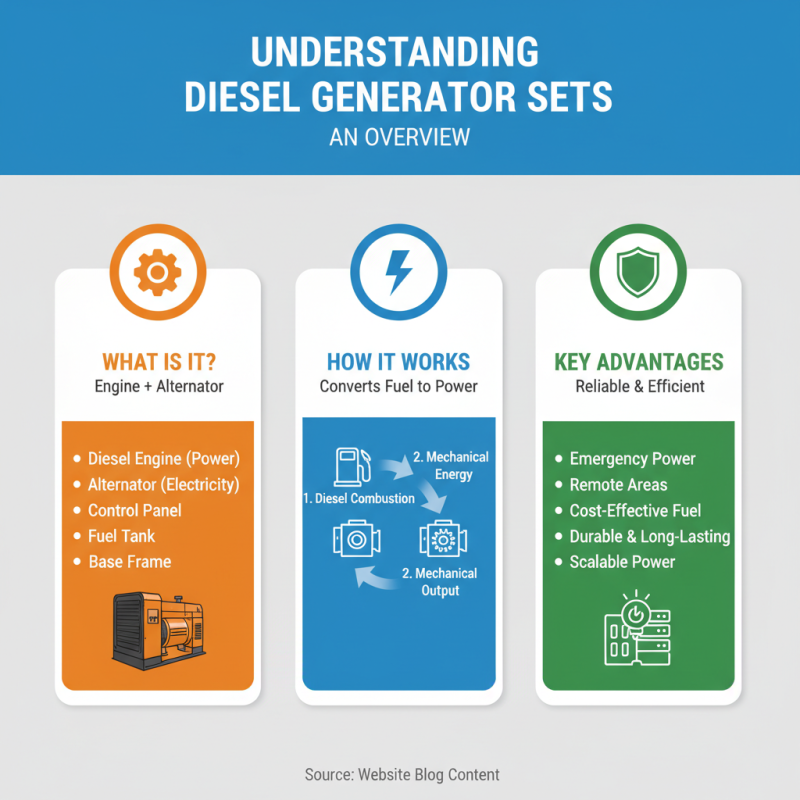
Understanding Diesel Generator Sets: An Overview
Diesel generator sets are essential for various applications. They provide reliable power in emergencies and during outages. Their design generally includes an engine, generator, fuel system, cooling, and control systems. Understanding these components is crucial for making informed decisions.
When choosing a diesel generator, consider your power needs. Assess how much electricity your appliances require. This will help you avoid selecting a generator that is either too small or excessive. Tips: Calculate the total wattage of devices you intend to power. It’s important to factor in starting and running watts.
Additionally, think about fuel efficiency. Different models consume varying amounts of diesel. A more efficient generator may cost more upfront but can save you money over time. Be aware that maintenance requirements differ widely. Some models might need frequent servicing, while others are more low-maintenance. Tips: Look for user reviews and expert assessments before making a choice. This research can help you gauge reliability and performance in real-world applications.
Assessing Your Power Needs: Calculating Required Output
Choosing the right diesel generator set (genset) starts with assessing your power needs. Understanding how much power you require is crucial. According to the International Energy Agency (IEA), approximately 1.2 billion people lack access to electricity. This statistic highlights the importance of reliable power solutions. Evaluating your equipment’s wattage is the first step. Add up the wattage of all appliances and tools you plan to power.
It's essential to consider your starting and running wattage. Some devices require a surge of power to start, which can be significantly higher than their running wattage. For instance, a refrigerator may need 1,200 watts to start but runs on only 200 watts. Understanding this difference helps in selecting the right genset size.
Tips: Always account for a buffer. Adding 20-30% more power capacity is wise. This buffer accommodates additional devices or future needs without overloading the generator.
When determining your requirements, think about the duration of use. Continuous use demands a different genset than occasional emergencies. The U.S. Energy Information Administration indicates that average households consume around 877 kWh per month. Adjust your calculations according to your situation. Reflect on your actual needs and resist the urge to overestimate. A reliable diesel generator provides peace of mind, but choosing the right one requires careful evaluation.
Factors Influencing Diesel Generator Selection: Size, Efficiency, and Cost
When selecting a diesel generator set, several key factors come into play. Size is one of the most critical elements. An undersized generator may not handle your power needs, leading to potential failures. On the other hand, oversized units can lead to increased fuel consumption and inefficiencies. According to industry research, optimal sizing allows generators to operate at 70-80% load capacity, maximizing performance and fuel efficiency.
Efficiency is another significant consideration. Diesel generators can vary widely in their fuel consumption rates. Recent reports indicate that high-efficiency models can achieve fuel consumption as low as 0.2 liters per kWh. Such efficiency not only lowers operational costs but also reduces emissions, aligning with sustainability goals. However, maintaining efficiency over time often requires regular servicing, adding to overall costs.
Cost is a paramount factor, too, but it should not solely dictate the decision. While the initial purchase price is important, long-term operational costs, including fuel price trends and maintenance needs, can substantially impact the total expenditure. Some reports suggest that poorly maintained generators can increase fuel costs by up to 30%. Balancing these factors is crucial for making an informed choice.
Comparison of Diesel Generator Set Selection Factors
This chart illustrates various factors influencing the selection of diesel generator sets, including size, efficiency, cost, noise level, and fuel consumption. Each factor is essential to ensure optimal performance according to specific needs.
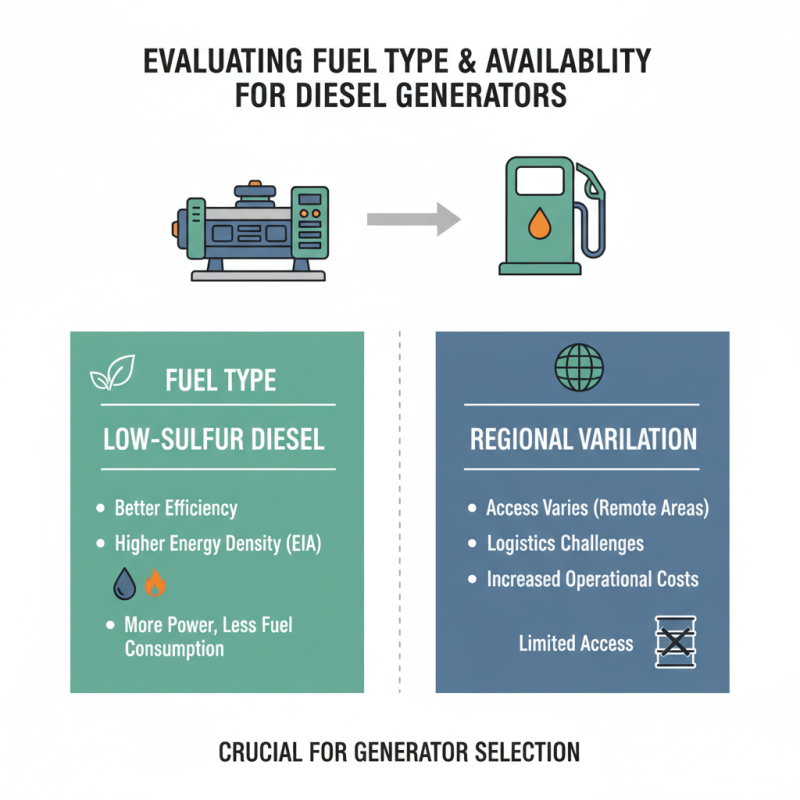
Evaluating Fuel Type and Availability for Diesel Generators
When selecting a diesel generator set, evaluating fuel type and availability is crucial. Diesel generators typically operate on low-sulfur diesel, which provides better efficiency. The U.S. Energy Information Administration (EIA) states that diesel fuel has a higher energy density than gasoline. This means you can generate more power while consuming less fuel. However, diesel availability can vary by region. In remote areas, access to diesel may be limited, complicating logistics and increasing operational costs.
Consideration of local infrastructure is vital. In many regions, supply chains for diesel fuel can be unreliable. According to the International Energy Agency, this can lead to price volatility and supply shortages. Planning for these scenarios reduces the risk of operational downtime. Additionally, alternative fuel sources like biodiesel could offer benefits. However, they require different engine specifications and careful handling during storage.
Understanding your specific fuel needs and available resources is essential. You may want to assess not only the immediate needs but also the long-term accessibility of diesel fuel. Regular analysis of market trends in fuel prices is important for budgeting. The fluctuating nature of fuel availability can impact your operational efficiency. Thus, thorough planning and a proactive approach are necessary to mitigate risks.
Maintenance Considerations: Ensuring Longevity and Performance
When selecting a diesel generator set, maintenance is crucial. Proper care can significantly impact longevity and performance. According to a report by the Diesel Generator Market Analysis, routine maintenance can extend the life of a generator by up to 30%. This includes regular oil changes and cooling system checks, which prevent overheating and maintain engine efficiency.
Neglecting maintenance can lead to costly repairs. For instance, a lack of routine inspections may result in unexpected breakdowns. A study from the Electric Power Research Institute revealed that 35% of generator failures are due to inadequate maintenance. Regularly replacing filters and monitoring fuel quality are simple yet effective ways to enhance performance.
Additionally, environmental factors play a role in generator upkeep. Operating in extreme conditions may necessitate more frequent maintenance. Dust, humidity, and temperature fluctuations can all affect performance. A well-documented maintenance schedule ensures not only compliance but also optimal operation. Adopting best practices in care can help users avoid preventable issues and improve reliability.